
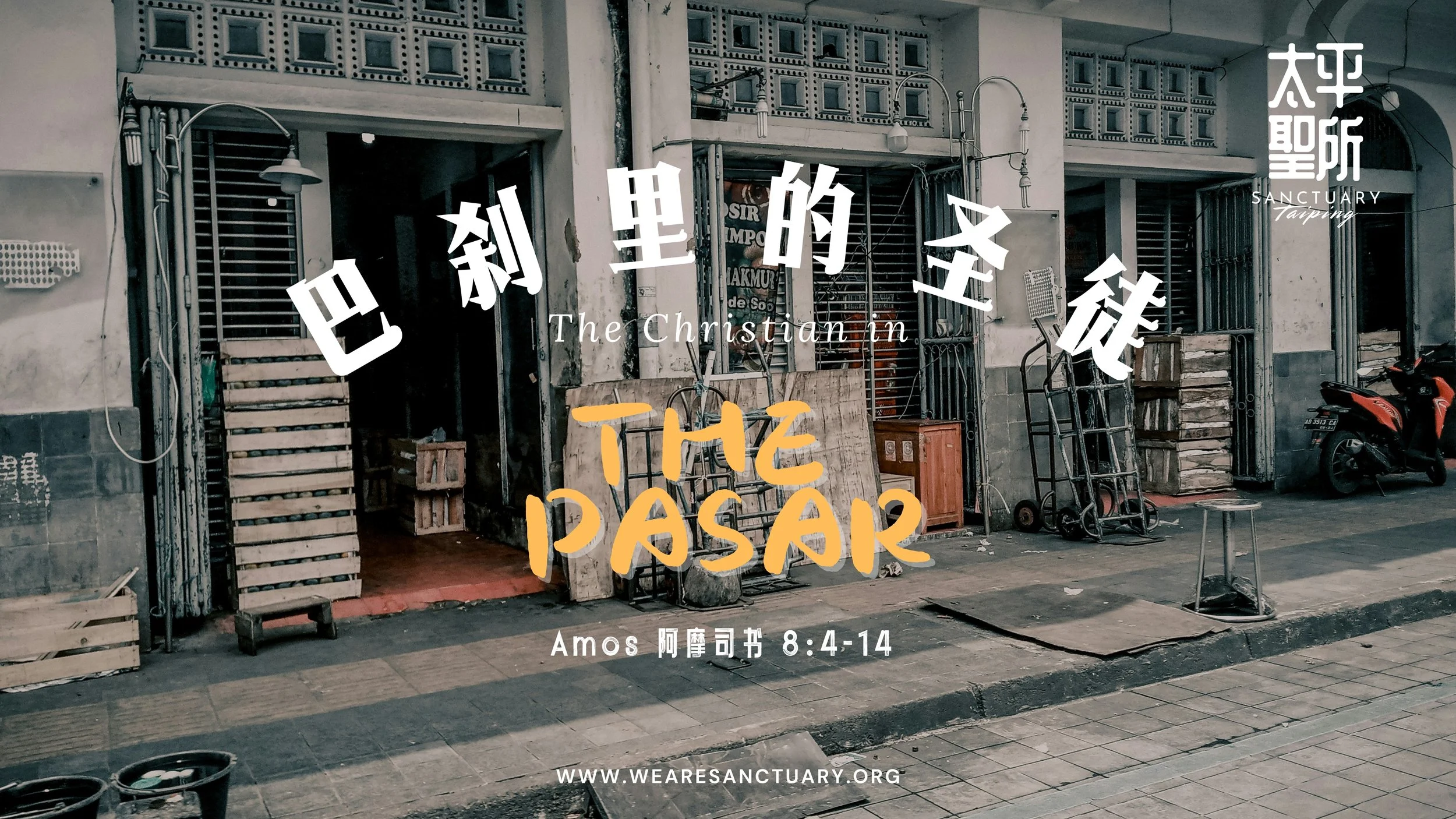
The Christian in the Pasar: Where Does Your Faith Live?
We begin with a question that may sound simple, but cuts to the very core of our spiritual identity:
Is your life best described as “a Christian in the Pasar” or as “a Pasar that happens to have a Christian in it”?
This is not mere wordplay. This small shift in phrasing reveals one of the most profound struggles in the life of faith. It draws the line between a faith that permeates our existence and one that remains compartmentalized, reserved for sacred spaces and Sundays.
Two Realities, Two Ways of Living
If you are “a Christian in the marketplace”, then the marketplace—whether an office, a school, a home, or an actual wet market—is simply the place where your life in Christ unfolds. Your identity as a follower of Jesus travels with you. You pray, you work, you interact, and your faith naturally shapes how you conduct business, treat people, and make decisions.
But if it is “a marketplace that happens to have a Christian in it”, everything changes. Here, the marketplace takes the leading role. Its rules, culture, and pressures set the agenda. The “Christian” part becomes an add-on, a secondary label—like describing someone as “a banker who also happens to be a Christian.” This easily fosters a spiritual split: one person in worship, another in the workplace.
This duality is not a modern invention. It is as old as faith itself.
What Amos Saw in the Marketplace
The ancient prophet Amos spoke to people who were devout in the temple but entirely different in the marketplace. In Amos 8, God confronts those who can’t wait for the Sabbath to end so they can return to cheating the poor with dishonest scales and selling moldy grain (Amos 8:5–6).
These were religiously observant people. They attended festivals and kept Sabbath rituals. But their hearts were already counting the cost of worship and calculating their next deal. Their faith did not inform their ethics. Their worship and their work lived in separate worlds.
Could this be us?
Honestly, Amos stings when we read him today. Because we all feel this tension:
Praying passionately on Sunday, but showing no patience with a colleague on Monday.
Giving generously in the offering plate, but refusing to yield in a negotiation.
Mourning suffering far away, yet overlooking the need right beside us.
This isn’t about Christians being unprofessional or not working hard. It’s about this: What truly defines us? Does our faith reshape our work, or has the world’s logic reshaped our faith?
When Market Logic Invades Faith
Amos reveals how “market logic” quietly replaces the logic of faith:
Time becomes a cost—even worship can feel like a “waste of time.”
People become resources—valued only as “useful” or “useless.”
Faith becomes transactional—minimized to what “works,” just enough to get by.
Worship becomes clocking in. Fairness is redefined as “Is this worth it?” We may still sing, serve, and give—but once we step into the real marketplace, we often:
Tamper with the measures (“How much is enough?”).
Overlook the vulnerable (“Efficiency comes first”).
Tolerate injustice (“Everyone else is doing it”).
This is what Eugene Peterson called “a spiritual life tamed by market logic.” We haven’t denied God—we’ve just slowly made Him a tool, pushed Him to the edges.
And the most dangerous result is not poverty or failure, but what Amos warned: You stop hearing God’s voice. When your ears are filled with the noise of the market, you miss the gentle whisper of God.
Today’s Marketplace
The “pasar” today is no longer just a physical market. It’s your KPIs, your sales targets, your online metrics, your promotion ladder, your efficiency reports. The question is not whether we are in the marketplace, but whether we have brought our faith into a transactional relationship with God.
Do you recognize these symptoms?
Worship becomes “the energy boost for Monday to Friday.”
Devotional reading turns into a tool for productivity or anxiety relief.
Prayer starts to sound like submitting a resource request to heaven.
God is asking us, just as He asked through Amos:
When you step into the marketplace after worship—what are you really selling? Whose logic are you living by?
The Cross Dismantles Transactional Faith
But God’s word through Amos is not merely condemnation. It is a grieving invitation: “Are you still willing to listen?”
What breaks the logic of the marketplace is not a stricter moral rule—it is the cross.
Market logic says:
Your worth depends on what you can exchange.
Your importance depends on your usefulness.
The cross declares the opposite:
God saves the world not through exchange, but through surrender.
Not by efficiency, but by love.
Not by calculating cost, but by bearing it.
Jesus Himself was judged by the market, religion, and power as “worthless.” Yet on the cross, God proclaims:
“A person’s value is not determined by the market, but by the price I paid for them.”
The cross dismantles our “transactional faith”—the idea that we give offerings so God gives blessings, that we obey so He makes us successful. The cross declares that God does not accept worship without love, yet He never abandons this broken world.
He enters our marketplace not to agree with its rules, but to buy us back from that very system.
So Who Defines Whom?
We return to the opening question:
“A saint in the marketplace” means my identity in Christ comes first. The marketplace is where I live it out.
“A marketplace that happens to have a saint in it” means the marketplace sets the rules. Faith becomes a sticker, a label, not a life.
The difference is not location—it is who defines whom.
To be a saint in the marketplace means:
Choosing integrity when the system allows gray areas.
Seeing the person, not just the resource, when everyone else sees a transaction.
Fearing the God who sees, even when no one else is watching.
As Eugene Peterson wrote, “Discipleship is learning to be faithful in the ordinary, the mundane.”And Dietrich Bonhoeffer stated starkly: “When Christ calls a person, He does not offer a new religion—He calls that person to die.”
We are not called to leave the marketplace. We are called to live within it a life that cannot be traded, cannot be assimilated.
True Worship Begins Tomorrow
True worship does not end with “Amen.” It begins with tomorrow’s first transaction, first decision, first word.
At that moment, the cross gently asks us:
This time, will you price things by market logic, or live by the price I paid for you?
That first transaction is more than a financial exchange—it is a choice of loyalty. There, we decide:
Will we let the marketplace define who we are, or let the cross redefine everything?
Let God redefine your ordinary days. Live in the marketplace as one who has been bought back—not by gold, but by grace.
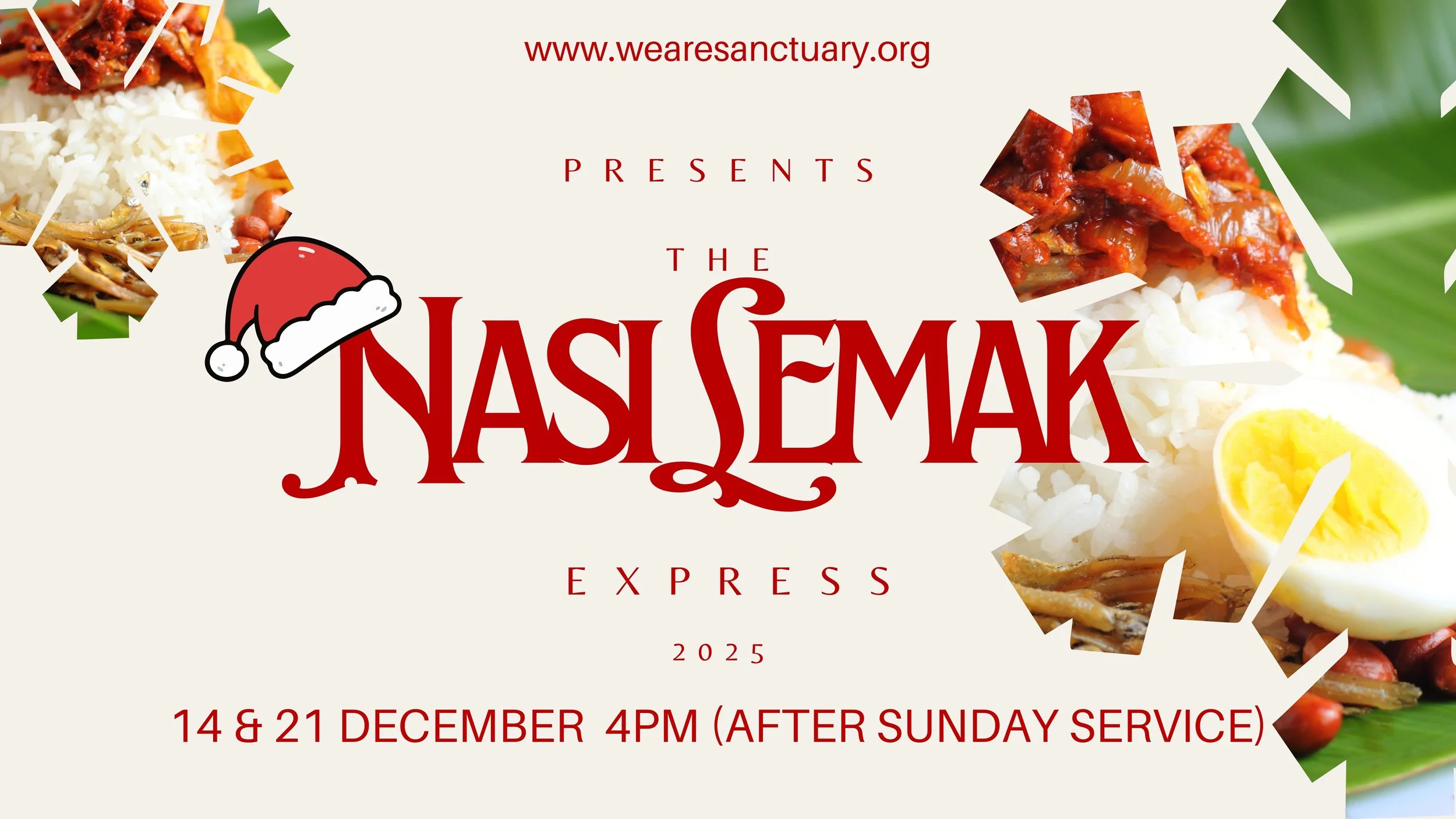
Serving Hope for the Holidays: How Nasi Lemak Express Brought Christmas Cheer to Taiping
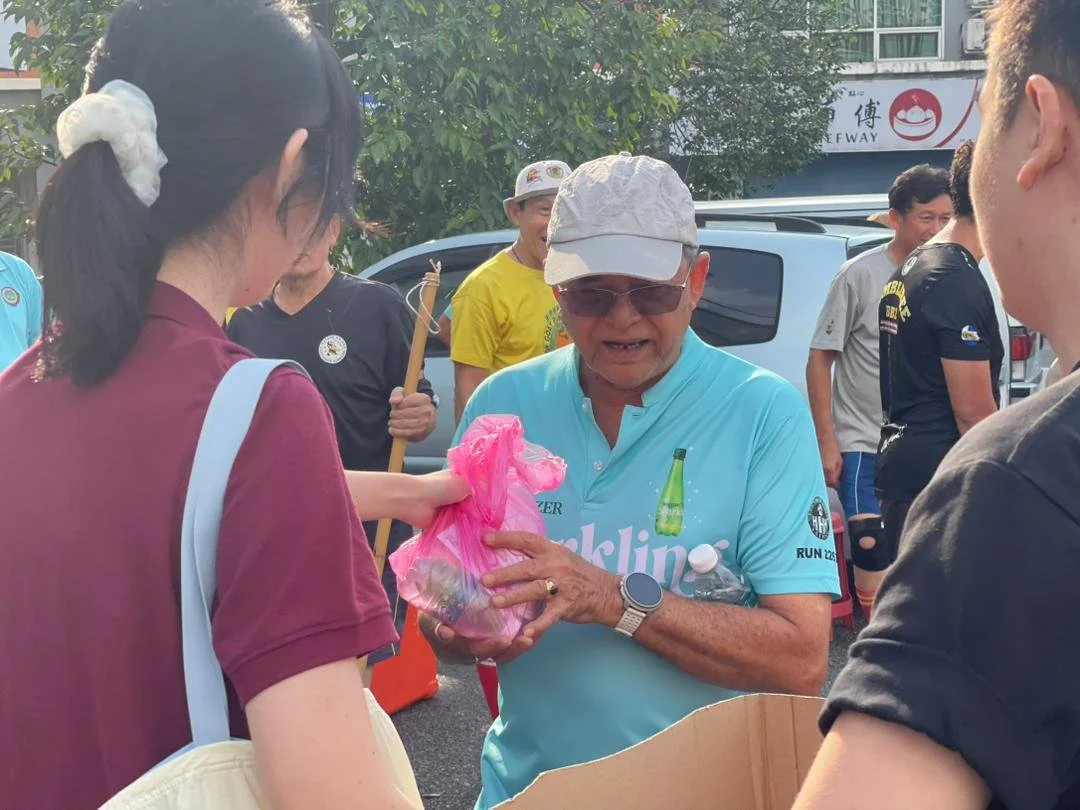
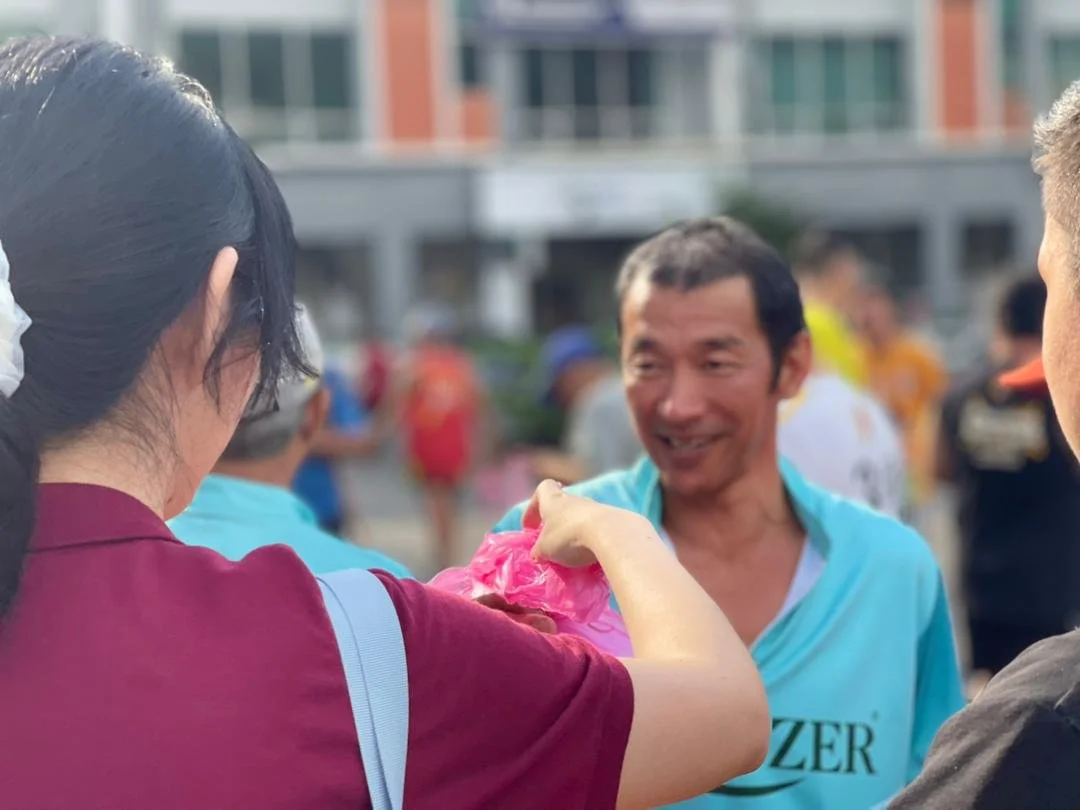
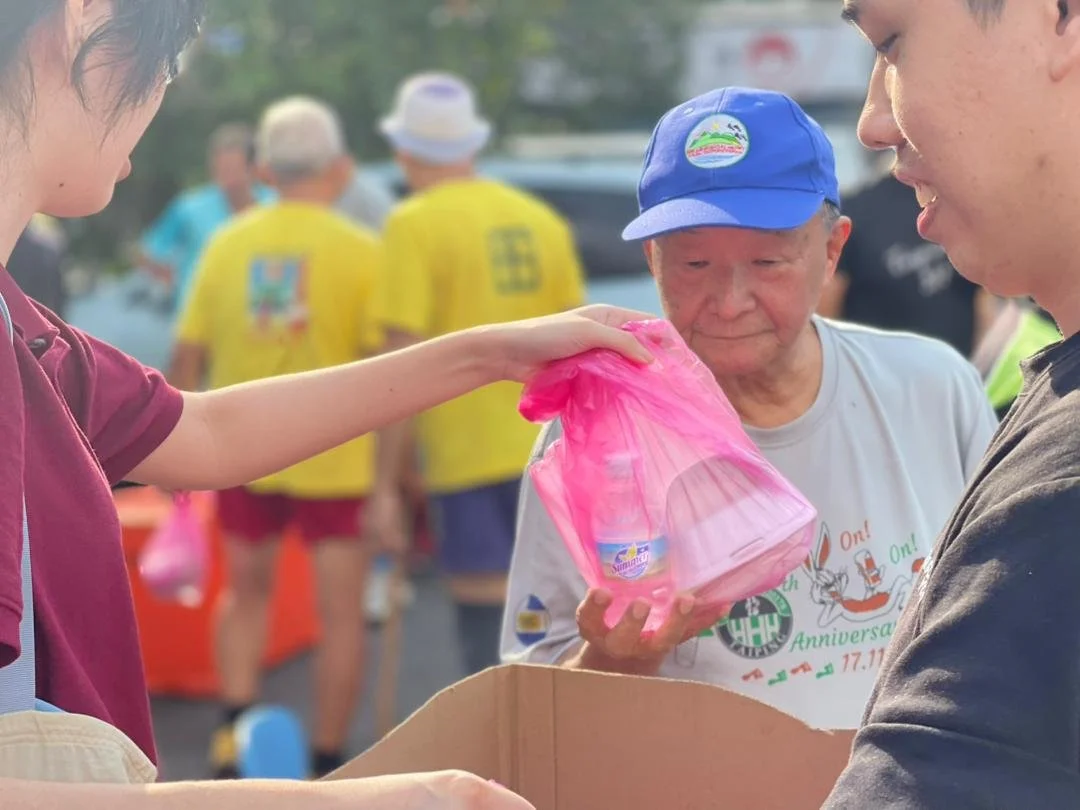
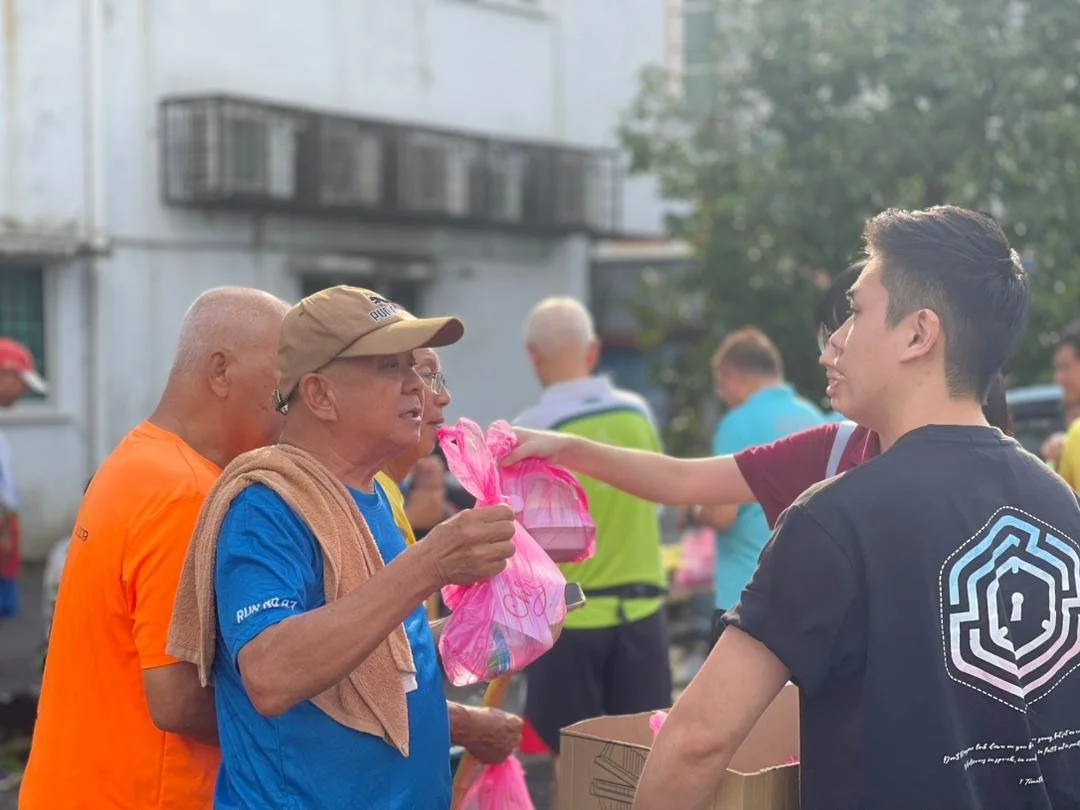
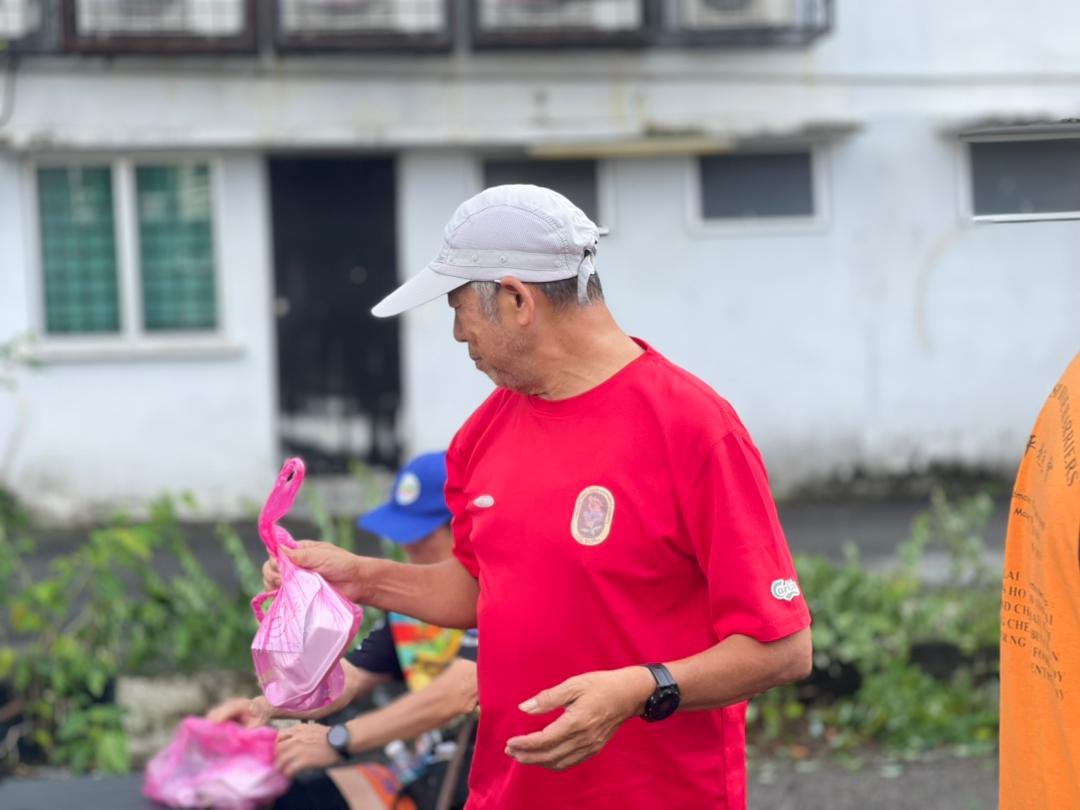

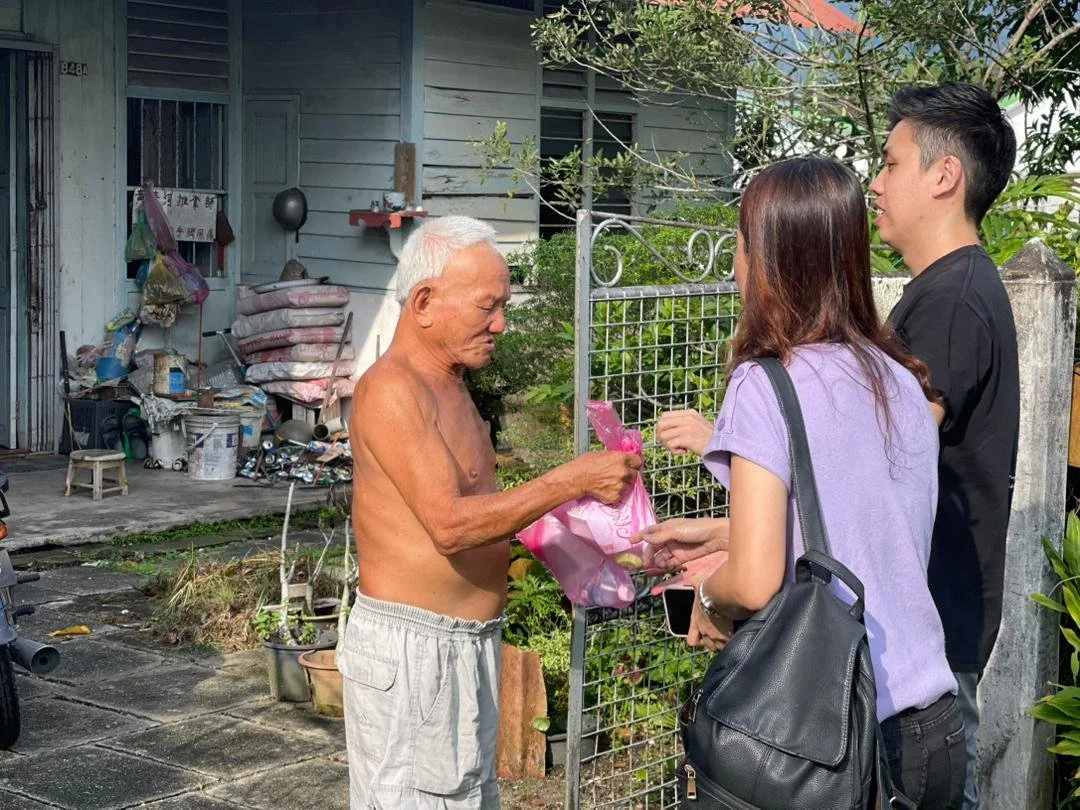
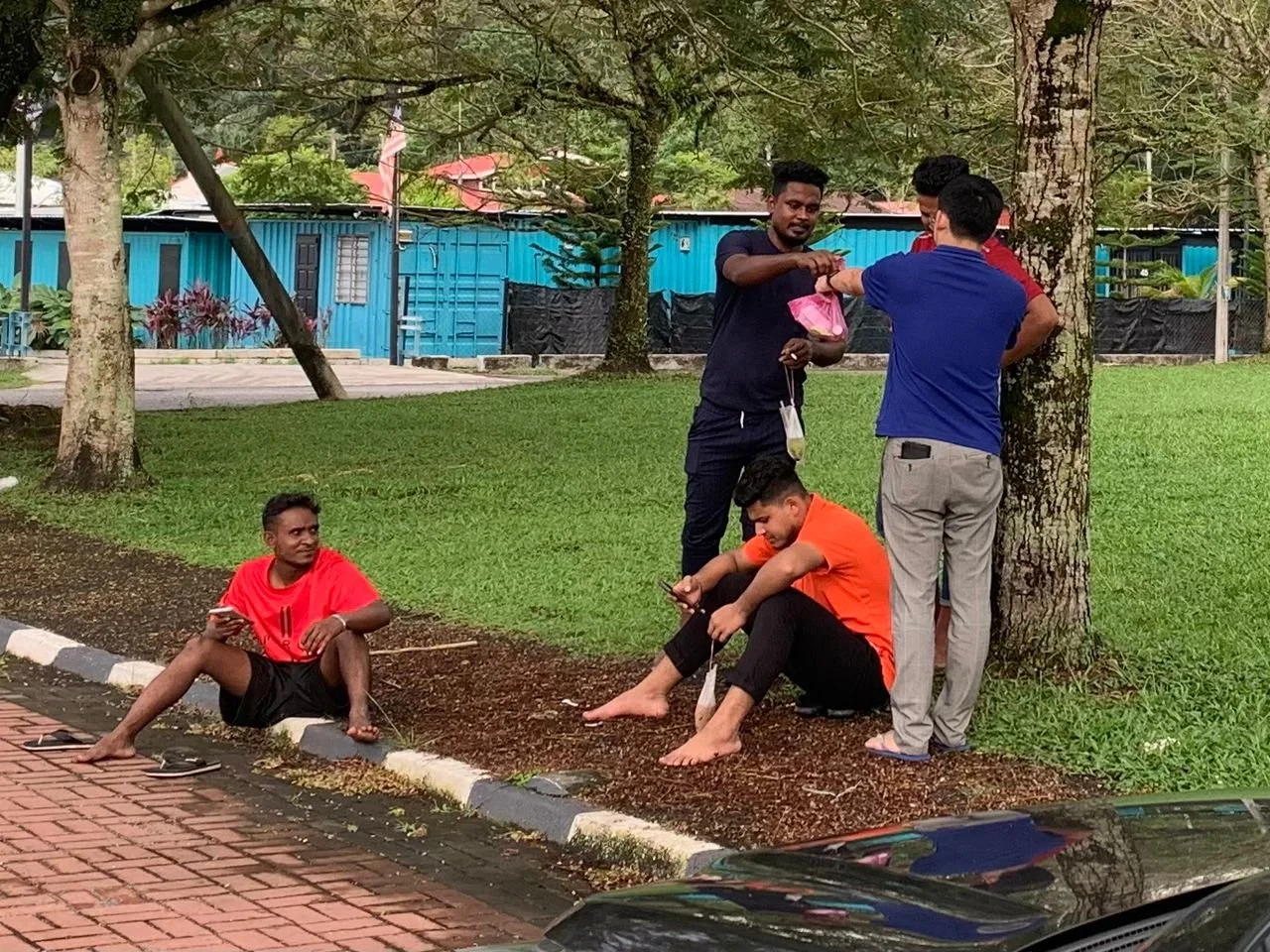
In the cool, festive air of a Taiping December, as Christmas lights began to twinkle and carols drifted through the evening, something special was simmering at Sanctuary Taiping. The comforting aroma of coconut rice, fragrant pandan, and spicy sambal blended with the spirit of the season—but this was no ordinary holiday feast. This was the Christmas Edition of the Nasi Lemak Express, a heartfelt initiative designed to bring nourishment, joy, and connection to the Taiping community during the season of giving.
A Christmas Mission Wrapped in Banana Leaves
Throughout the festive month, volunteers from Sanctuary Taiping came together in an effort to show holiday hospitality by distributing packed nasi lemak to the community in Taiping. Each packet of nasi lemak included a small festive treat or a handwritten note wishing recipients “Merry Christmas.” The message took on a seasonal warmth, celebrating not just community, but the gift of togetherness that defines Christmas.
More Than a Meal—A Gift of Presence
In a season often marked by rush and expense, the Nasi Lemak Express offered something simple yet profound:
Nourishment: A warm, hearty meal for families, elderly residents, and individuals facing a quiet or difficult Christmas.
Festive Connection: Delivering not just food, but holiday smiles, short chats, and the reminder that no one is forgotten.
Seasonal Dignity: Ensuring that the joy of Christmas could be tasted and felt, regardless of circumstance.
Why This Christmas Initiative Mattered
The Christmas Nasi Lemak Express did more than fill plates—it filled hearts. It:
Bridged the festive gap for those who might otherwise spend the season unseen.
Turned a simple local dish into a symbol of holiday love, proving that Christmas generosity doesn’t have to be grand—just genuine.
Unified the community across faiths and backgrounds, in the shared language of kindness.
A Christmas Legacy in Taiping
Like the gentle rain that blesses Taiping’s hills, this initiative sprinkled hope throughout the town in December. It was a reminder that the best Christmas gifts aren’t always under a tree—sometimes, they’re packed in banana leaves, delivered with a smile, and shared among neighbors.
As the year draws to a close, the Nasi Lemak Express leaves behind a question—one that lingers like the scent of coconut rice and Christmas pine: How can we carry this spirit of giving into the new year?
This Christmas outreach was made possible by the volunteers and donors of Sanctuary Taiping. To learn about their ongoing community work or support their efforts, visit their centre or connect through their local channels.
Rediscovering Christmas: When the Party Overshadows the Purpose
The lights are strung, the carols are playing, and our calendars are filling with festive events. In churches everywhere, choirs are rehearsing, stages are being built, and programs are being polished to perfection. It’s the most wonderful—and busiest—time of the year. But in the whirlwind of tinsel and tradition, a quiet, essential question risks being drowned out: What are we actually celebrating?
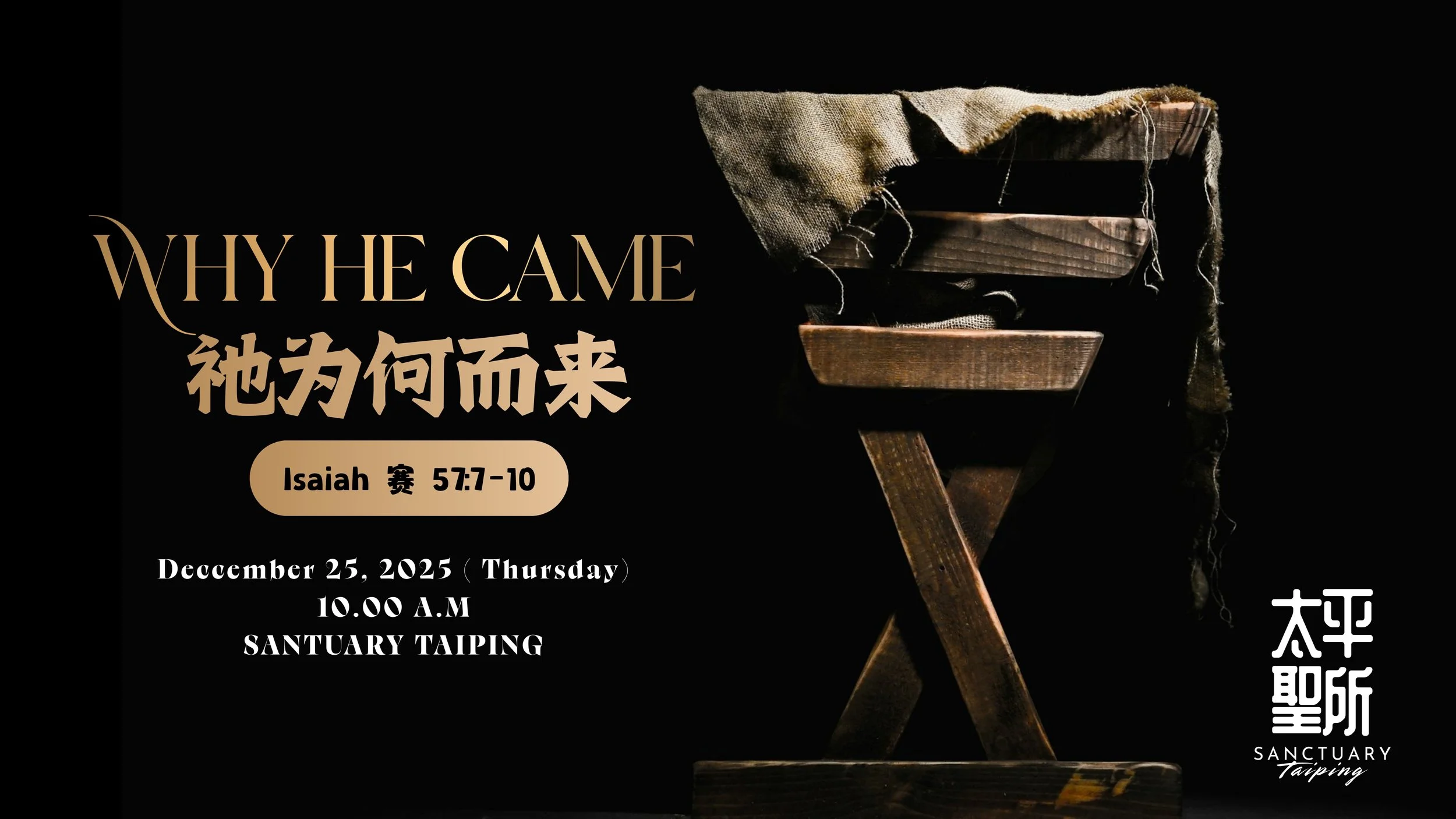
The sermon "Why He Came" invites us to step back from the noise and return to the stunning, subversive simplicity of the first Christmas. Using the poignant critique of Isaiah 57, it draws a startling parallel between ancient Israel’s exhausted religious performances and our own modern Christmas celebrations. The people in Isaiah’s time were busy—making more sacrifices, climbing higher mountains, adding more rituals—all while their hearts grew distant from God. They were weary but wouldn’t admit it was hopeless, mistaking activity for intimacy.
Sound familiar?
We, too, can become weary in our well-doing. We plan, we decorate, we perform, all in the name of celebrating Jesus’ birth. But have we, like Isaiah’s audience, subtly replaced heartfelt worship with external production? The sermon challenges us to examine five critical imbalances that can shift our focus from the cradle to the crowd:
The Reversal of Gift and Demand: We can unconsciously act as if God needs our magnificent celebration to feel honored. Yet, the first Christmas was not a demand from heaven but a gift toearth. He came not to be served, but to serve. Are we throwing a party for God, or are we humbly receiving His incredible gift?
The Shift of Focus: Success metrics quietly change. Is it about the perfection of the choir harmony, the number of seats filled, or the liveliness of the atmosphere? When these become primary, Christ’s birth moves from the center to a mere theme.
The Misplacement of Resources: Contrast the manger’s poverty with the sometimes staggering cost of our celebrations. The question isn’t about spending but stewardship: Do our expenditures help people gaze in awe at Christ, or merely at the spectacle we’ve created?
The Alienation of Participants: For many in our congregations—especially our youth—Christmas memories are not of grace and joy, but of duty, performance pressure, and backstage fatigue. When participation becomes "event production" labor, the soul’s chance to receive is lost.
The Dilution of Spiritual Essence: Christmas can easily degrade into a warm, familiar cultural festival. We enjoy the feast and the fellowship but leave untouched by the shocking mystery: The infinite Creator became a vulnerable baby. Awe is replaced by sentimentality.
So, what is the way back?
The path isn’t to cancel Christmas but to re-center it. The sermon doesn’t end with critique but with a hopeful invitation to find balance:
Reposition the Celebration: Let it be a "grateful response to God’s gift," not a "performance for God."
Redirect Resources: Could part of our Christmas budget extend Christ’s love to the poor and lonely in our community?
Redesign Participation: Create spaces for quiet reflection amidst the busyness. Let young people understand the story, not just perform it.
Simplify to Deepen: Sometimes, a small, thoughtful gathering can stir the heart more than a grand production.
The true meaning of Christmas lies in a divine reversal so profound we can never fully grasp it: eternity entered time, glory wrapped in humility. The most splendid part of that first night was not any human activity, but the divine act itself: "God became man."
This year, as the carols ring out, may they call us back to the core. Our calling is not to outdo last year’s celebration, but to be freshly undone by the Savior’s love. The best way to celebrate the One who made Himself small is not with our biggest show, but with our most humble, grateful, and open hearts.
May this Christmas change us once again—not because of the party we threw, but because we paused long enough to remember why He came.
“May It Be Done”: The Unseen Courage of a Simple “Yes”
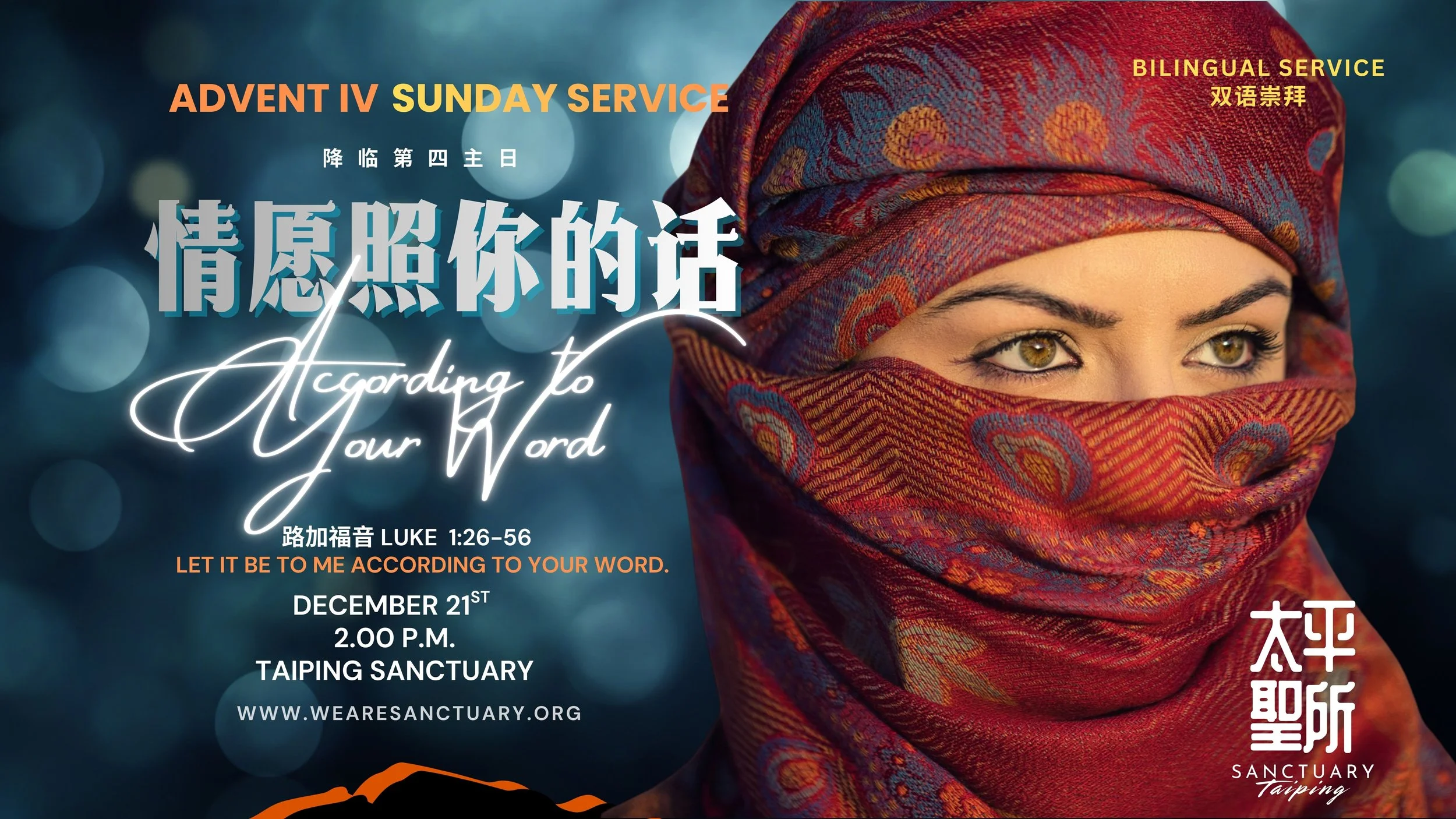
As the lights go up and carols fill the air each December, our minds naturally turn to the familiar scenes of Christmas: the manger, the shepherds, the star, the infant King. Yet, behind this serene tableau lies a far more human, more perilous, and more pivotal moment—one often passed over in the glitter of the season. It is the moment a young girl, alone with an angel, said a single sentence that changed everything: “I am the Lord’s bondslave; may it be done to me according to your word” (Luke 1:38).
This was not a casual agreement. It was a freefall into the unknown, a surrender that risked everything she knew—her marriage, her reputation, her safety, her future. In a culture where unwed pregnancy could mean social exile or even death, Mary’s “yes” was not a peaceful sigh, but an act of tremendous courage. It was faith, not in the absence of fear, but in spite of it.
In our own lives, faith is often conditional. We want to understand first, to see the plan, to weigh the risks. Like Zechariah, the priest in the same chapter, we ask for signs: “How shall I know this?” We base our trust on what makes sense to us, on what fits within our rational boundaries. But Mary shows us a different way. Her question was not “How can I believe?” but “How will this happen?” She did not demand proof; she sought understanding of God’s method. Her faith rested not on her ability to comprehend, but on God’s ability to accomplish.
“According to your word,” she said. Her trust was anchored not in a feeling, not in favorable circumstances, but in the specific promise God had spoken. In a world where our faith can sway with our emotions or our situation, Mary’s example calls us back to the foundation: God’s Word itself. Christmas is, at its heart, the story of the Word becoming flesh—God’s promise taking on skin and bone and breath. Mary believed that the God who spoke was able to perform what He said. Do we?
And then came the most personal, most costly phrase: “May it be done to me.” Mary did not outsource God’s plan. She stepped into the center of it. She offered not just her belief, but her body, her life, her future. She became the vessel through which the Savior entered the world. In doing so, she shows us that true faith is always incarnational—it lands in our reality. It involves our hands, our time, our relationships, our choices.
This Christmas, the invitation of Mary’s story remains open. God is still looking for those willing to say, “May it be done to me.”
In a strained marriage, it may mean saying, “Lord, I am willing to love patiently, starting with me.”
In a conflicted family, it may mean, “I am willing to forgive, beginning with me.”
In exhaustion or despair, it may mean, “I am willing to trust that Your strength is made perfect in my weakness.”
In the daily grind of work and responsibility, it may mean, “I am willing to do this for Your glory today.”
Christmas is more than a memory. It is a present-tense reality. Jesus is still being born—into our struggles, our decisions, our ordinary moments—whenever we, like Mary, choose to let God’s will take shape in and through us.
Two scenes from Luke 1 linger in contrast: the majestic temple where Zechariah’s doubt brought silence, and the humble home where Mary’s faith sparked a song of praise that echoes through history. This season, which scene does our own life reflect? A place of knowing but not trusting, of ritual without resonance? Or a place of willing surrender, where praise flows freely from a heart that believes God keeps His word?
Mary’s “yes” set redemption in motion. Today, in the quiet of our own hearts, God still speaks. His Word comes. And our response—whether fearful, questioning, but ultimately willing—can still change the story.
May we have the courage, not just to celebrate the Child in the manger, but to join the mother who said, “I am willing. Let it be to me as You have said.”
Amen.
Building Sanctuary: A Call to Clean Hands, Courageous Hearts, and Community
“Consider now, for the LORD has chosen you to build a house for the sanctuary; be strong, and do it.” — 1 Chronicles 28:10
These ancient words, spoken by King David to his son Solomon, are not just a historical footnote—they are a living blueprint for anyone called to build something sacred. In the quiet city of Taiping, a new community named “Sanctuary” is embracing this divine mandate, not to construct a physical temple, but to build a spiritual home—a family in Christ.
The launch of Sanctuary is more than the start of another church; it is the birth of a vision rooted in legacy, purity, and courage. Drawing from the poignant transition in 1 Chronicles 28, where David passes the baton to Solomon, we are reminded that building for God often requires different hands than those who conceived the dream. David, a warrior king, was disqualified from building the temple due to the blood on his hands. Yet, he did not withdraw in disappointment. Instead, he dedicated his final years to gathering the finest materials and preparing the way. His lesson? Even when we cannot finish the task ourselves, we can pour our best into laying its foundation.
This resonates deeply with Sanctuary’s ethos. While we may not be stacking stones or carving cedar, we are called to build a community with the same excellence, intention, and sacrifice. And this building project begins not with programs or policies, but with the condition of our hearts.
1. Building with Clean Hands and a Pure Heart
The cornerstone of Sanctuary is integrity. Psalm 24 asks, “Who may ascend the mountain of the LORD? He who has clean hands and a pure heart.” This is not merely a spiritual ideal but a practical necessity. As the message clearly states, Sanctuary cannot be built on the debris of past hurts, gossip, or vengeance. It is a call to collective forgiveness—to let go, to heal, and to move forward.
Practically, this means:
Releasing the past: Choosing to stop rehearsing old narratives and instead fix our eyes on the future God is writing.
Choosing uplifting community: Surrounding ourselves with those who encourage, not those who drain or destroy—while still holding them in prayer.
Praying for healing: Actively seeking God’s comfort and extending forgiveness, both for ourselves and for others.
Sanctuary is designed to be a fresh start—a place where stories are rewritten by grace.
2. Serving with a Loyal Heart and a Willing Mind
King David’s charge to Solomon was to serve God “with a loyal heart and a willing mind.” At Sanctuary, servanthood is a core value, but it is framed with profound wisdom: “The heart of the matter is the matter of the heart.”
Service here is not about performance, burnout, or appearance. It is about devotion. Leaders are encouraged to monitor their hearts and their energy, to rest when needed, and to remember that what God desires is not perfect activity, but a willing and loving spirit. This creates a sustainable culture of service—one where people serve from abundance, not depletion, knowing that God searches the heart and rewards faithfulness.
3. Moving Forward with Strength and Courage
Building anything meaningful involves challenges. Sanctuary’s leaders are refreshingly honest: there will be opposition, spiritual battles, and days of doubt. Yet the refrain echoes David’s encouragement to Solomon: “Be strong and of good courage… He will not leave you nor forsake you.”
This courage is rooted in the conviction that God is present in the journey. It’s the courage to create a safe space in a broken world, to love boldly, and to stand firm when obstacles arise. As Ephesians 6:12 reminds us, the struggle is often spiritual, but the victory is assured in Christ.
What—and Who—Is Sanctuary For?
Sanctuary’s mission is clear: to glorify God through innovative worship, excellence in service, and unwavering honor. But it’s the heartbeat of the mission that truly defines it: “Love God, Love People, Make a Difference, and Make Disciples.”
This is a community where “you belong before you believe.” It is a refuge for the weary, a home for the searching, and a family for the lonely. It is:
A safe space without judgment.
A place of discovery where individuals can explore God’s purpose for their lives.
A Christ-centered, Spirit-powered, connection-driven family.
In the end, Sanctuary is not just a name—it’s a promise. A promise of safety, of belonging, and of a shared journey toward God. It’s an invitation to pick up the torch passed down through generations, to build something beautiful for God, and to do it together—with clean hands, willing hearts, and unshakable courage.
Welcome home.
Our City, Our Calling: How Building a City Builds the Church
In the heart of Taiping, a powerful conviction is taking shape within the community of Sanctuary Taiping. It’s a belief that the future of the church is inextricably linked to the flourishing of the city it calls home. Over two sermons in November 2025, this vision was cast with clarity and urgency: we build the church by building the city.
This isn’t merely a slogan; it’s a theological and practical roadmap drawn from ancient scripture and applied to modern streets. It’s a call to move beyond the walls of a sanctuary and into the broken, beautiful spaces of everyday life.
The Nehemiah Model: A Blueprint for Restoration
The first message turned to the Old Testament book of Nehemiah, presenting a timeless four-stage blueprint for godly action.
It begins with The Burden. Nehemiah, a comfortable cupbearer in a king’s palace, was shattered upon hearing of Jerusalem’s ruins. His story challenges the common thought, “Someone should do something,” and replaces it with a personal, holy disruption. For Taiping, this means allowing our hearts to be broken by what breaks God’s heart—the hidden poverty, the youth struggling for purpose, the community divisions. “When we see our home in ruins,” the message urged, “it should break our hearts.”
But burden alone is not enough. It must be laid on The Foundation of prayer. Nehemiah’s response was not immediate activism but prolonged prayer—adoring God, confessing collective sin, clinging to divine promises, and making specific requests. This prayerful foundation, illustrated by revivals like the local Bario Revival, aligns human will with divine purpose and ensures our plans are filled with His power.
With that foundation, we move to The Plan. After months of prayer, Nehemiah seized a God-opened opportunity with clear, bold requests to the king. He teaches us that faithful action requires practical planning. “God moves when you move,” the congregation was reminded. We are to use our minds and resources, preparing for action while praying for the door to open.
Finally, there is The Action. Nehemiah exemplifies courageous, servant leadership. He didn’t delegate from a distance; he went, secretly assessed the damage, cast a compelling vision to the people (“Let us rise up and build”), and confronted opposition with unwavering faith. This is the antithesis of “NATO” (No Action, Talk Only). It is leading by example, getting your hands dirty, and inspiring a community to join in the good work.
The application was direct: “As much as we want to grow our church, we won’t grow it by just mere invitations week in, and week out, but we build the church, by building the city.”
The Heart of the Call: A Lifestyle of Radical Generosity
If Part 1 was the “why” and the “how,” Part 2 became the “what”—what does this city-building love look like in practice? The answer: a lifestyle of radical generosity.
“Our calling to this city is not just to live in it,” the second message declared, “but it is our calling to actively love it.” This generosity is a reflection of a generous God, who “so loved the world that he gave…” (John 3:16). It’s a responsive overflow, not a religious obligation.
The church outlined three tangible avenues for this generosity:
Generosity with Our Resources (Our Treasure): This goes beyond typical giving. In a creative new initiative, the church launched Sanc Coffee. For special contributions, members receive premium coffee beans sourced and roasted in Chiang Rai, Thailand. Every bag sows into community transformation in Taiping and supports mission work abroad, turning a daily ritual into an act of global and local love.
Generosity with Our Time and Gifts (Our Talents): Recognising that not everyone can give millions, but everyone has something to offer, the church pointed to Peter’s exhortation to use our gifts to serve others. The practical call was to join initiatives like the “Sandwich Sleigh,”where volunteers make fresh sandwiches to distribute in the community, or to offer skills like teaching music online to overseas outreach centres.
Generosity with Our Love and Welcome (Our Table): Following Jesus’s radical instruction to invite the poor, the crippled, and the marginalized, the church encouraged opening homes, lives, and small groups. To institutionalise this welcome, they introduced Sanctuary Stay, a church-based homestay. This initiative not only generates income for church missions and local care projects but also opens a natural door for guests to experience Christian community.
Answering the Call Together
The series culminated in a direct challenge. Loving Taiping—our “extended family”—is our collective calling. To step into this, a practical four-level challenge was issued:
Level 1: Pray for your city by name, every day.
Level 2: Engage your resources by giving to a local cause.
Level 3: Invest your time by serving in a local organization.
Level 4: Extend your welcome by sharing a meal with someone different from you.
The vision of Sanctuary Taiping is a transformative one: a church known not for its size but for its radical, generative love for its city. It’s a vision where the well-being of every resident matters, where spiritual growth is linked to social action, and where the love of Christ is made visible through cups of coffee, homemade sandwiches, and open doors.
This is more than a sermon series; it’s a manifesto for community engagement. This is our city. And this—the active, prayerful, generous work of building it up—is our sacred calling.